The academic year has flown by; I suppose that it is cliché to state that it seems like it was only yesterday since I was assigned to create this blog back in October, but I can’t help but insist that this was my experience. Being tasked with creating and maintaining a blog elicited a melange of feelings. I was simultaneously dubious about the process, yet excited to learn and see the benefits I would reap from it. The nervousness is visible from the introductory post I made; I think. Nervous and a tad rambling:
“I’m excited and a little nervous to start my adventures in blogging. I’ve never attempted to blog in an academic sense. The same applies for casual blogging with extensive entries. The days where sites dedicated to extensive forms of blogging existed, like Myspace or LiveJournal, were pretty much defunct by the time I started to use the internet. I suppose Twitter functions as a platform for blogging now, if you bypass the character limit by making threads. But I digress. I hope that this experience of owning and maintaining this blog will aid in lessening the anxieties I have surrounding it.” – Hello!
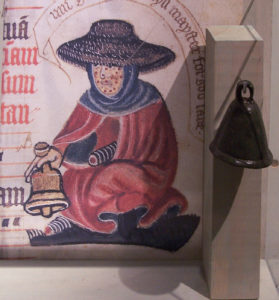
With little formal blogging experience under my belt (that is, to say, none), I decided that it was important for me to set goals for myself in order to learn. There was also some discomfort regarding pushing myself to write more frequently. The blog challenged me to become more used to the idea of experimenting and writing about what I wanted, offering a space where I could do so. It was very different from my experiences in undergraduate English – where essay questions are prescribed and it is clear-cut regarding what is required, providing some leeway for creative expression, but not fully allowing one to go off the rails, so to speak. I felt more comfortable writing monthly, longer-form blog posts that leaned more towards the academic than the personal, at least initially. I mentioned Kristeva as one of my favourite postmodern feminists in my introductory post, promising to write an entry about her – which I did! The first entry of my blog, titled Approaching Abjection: The Leper’s Body in Henryson’s The Testament of Cresseid was created as a belated Halloween post. Middle English literature has always been a favourite of mine (although the text I discuss in my blog post is written in Middle Scots). The Testament of Cresseid was of particular interest to me when the text was covered in class, so it only made sense that I would ease into scholarly blogging by discussing the text. I began with an introduction and example to abjection theory, a necessary precursor to situate it within the context of Testament:
“So, how does Kristeva define the abject and its process? To briefly define abjection: it is the human reaction (feelings of terror, crying, vomiting) to a perceived threat that triggers a breakdown of meaning within the self. It is what is “permanently thrust aside in order to live” – through repression and rejection. (Kristeva 3) The abject is not the object itself that elicits fear, rather something intangible existing in the liminal space within the psyche. It dwells within the lines of established binaries, exemplified with the analogy Kristeva provides of the boundary between the living body and the human cadaver. (4) However, it isn’t the sight of the corpse itself that elicits the reaction. The corpse is an object; the dread that accompanies the visible corpse is the threat of the border of the established dead encroaching the border of the living. Abjection disregards the constructed boundaries that humans have placed to establish meaning – its threat lies within the destruction of order.” – Approaching Abjection: The Leper’s Body in Henryson’s The Testament of Cresseid
I had also mentioned my interest in themes of sin and transgression in Middle English literature in my introductory blog post, so I leapt at the opportunity to discuss those aspects of the text. Testament also aligned with my academic interests in how disability is depicted and viewed in medieval literature:
“Leprosy has been a disease that has held stigma throughout history, retaining the prejudices of the label into the modern period. An example of this was how the term leper was used interchangeably with HIV positive people. During the height of the AIDS/HIV epidemic, children suffered from this were termed “the new lepers”. (Chace) Abjection physically excludes the vulnerable, forming the basis of hatred. Although attitudes to disability were not monolithic, there existed the idea that disability was a punishment for sin or being born under the planet Saturn. (Historic England) Incidentally, Cresseid is punished for her sins in a joint verdict by Saturn, depicted as a malevolent entity, and Cynthia: the punishment being leprosy. In his introduction to the Testament, a strong association between sexual promiscuity and the contraction of leprosy during the Middle Ages is referred to. (Kindrick) Although Cresseid is punished for the sin of rejecting her former deities instead of her promiscuity, I believe Henryson’s characterisation of Cresseid as an implied prostitute prior to becoming Cresseid the leper links the two together, reinforcing the idea that leprosy and sin are causative.” – Approaching Abjection: The Leper’s Body in Henryson’s The Testament of Cresseid
Perhaps it is morbid to mention this, but I immensely enjoyed writing this blog entry. It allowed me to apply a strand of critical theory directly onto a text and place them in dialogue with one another. In mentioning this, I also felt as though my post was overly laden with theory and academic jargon, and I don’t think my personal quip at the end of it fully balanced out the scholarly aspect. Although it was a valuable experience to be able to experiment in my writing, it didn’t fit my aims for this blog – I wanted it to be informative, yet also accessible. Difficulties in establishing tone aside, writing this blog post was ultimately a great choice for me. This text, along with Troilus and Criseyde, are going to be the primary texts that I will be using in my thesis. There is scholarly work to be done with Testament, and it would be a pleasure to contribute to the research.
Digression about my thesis aside, I decided to write about something more topical in December: I posted an entry to my blog about the ethics of A.I. learning software and the repercussions it has on freelance artists. It had no relevance to my coursework, but it was an issue I was passionate about. It is a debate that I would argue is more topical now than at the time I made the decision to write the post. It also allowed me to experiment with the tone of my blog, allowing for the opportunity to insert more personal opinions and pivot away from a overly academic, inaccessible posts. I think the balance between supplying information and synthesising my personal feelings (they were quite strong!) on the matter was accomplished:
“You’ve probably heard of DALL-E, or at least seen its capabilities. Released in 2021 by OpenAI, DALL-E operates as a form of creative AI. To put it in simple terms (my technological knowledge is also quite rudimentary, as a disclaimer) it learns by scouring the internet and scraping millions of images and text captions. When users plug in certain keywords, “butterfly”, for example, DALL-E generates an image from this word prompt. The generated image is produced from a cluster of various images and bits of metadata that the AI has extrapolated from the internet. I think fascination with it is only natural, seeing that we are at a point in technological history where a machine can generate images which are extremely realistic and rarely fails in that regard.
While it is an impressive feat, ethical questions are starting to arise. After the success that DALL-E saw, Boris Daymas began an AI learning model, Craiyon as an attempt to replicate DALL-E. A lot of the images Craiyon used contained watermarks that denoted that the images in question were copyrighted. This was especially seen in landscape photos, but Google had listed these watermarked images for use. Despite these images coming from sites like Shutterstock: a photograph-hosting website that has written policies against datamining and the use of robots for gathering data. Concerns about piracy, plagiarism and payment to the owners of these images have been voiced. There have been worries expressed by artists who fear they will be displaced by creative AI. I think that these concerns should be taken seriously: perhaps these fears seem hyperbolic, but freelance artists have had their digital art stolen by learning AI without being recompensated financially. […] There has always been debate on what qualifies as art and artists who try to stretch the parameters of it. Think Andy Warhol’s pop art, Jackson Pollock’s drip paintings. Even a few years ago, when that banana duct-taped to a canvas surfaced and sparked arguments. Everyone has an opinion formed on what is supposed to be art and what isn’t. AI art isn’t divorced from this argument. Advocates for these learning AI would certainly call it art. But for these creative AI to function, it needs to absorb information from the pre-existing creations of people. For me, autonomising the creative process seems soulless and inorganic. Is someone plugging in a few keywords, having a machine spit out an image generated from hundreds of (possibly stolen) images considered art? Should it be?” – Some thoughts on AI art
I still hold this viewpoint. Attempting to remove the human element from art continues to provoke frustration from me. This autonomisation of the creative process does not restrict itself to producing artwork: recently, there have been incidents of students have been utilising ChatGPT, to write essays for them. You only need to Google search “ChatGPT essay” and the front page will yield several websites that outline how to use the software to write essays without “being caught”, littered amongst news articles detailing cases where students have been discovered using ChatGPT for their essays. Concluding my commentary about this entry, I would like to reiterate that I do not regret writing this post: quite the opposite, in fact. It helped to imbue some of my personality into my writing, where it would not be entirely fitting otherwise, like with the previous, more academic Testament post.
After writing these two blog entries, I was inevitably swamped with assignments, so I took this time to improve the layout of my blog: adding hyperlinks, linking social media and grouping my posts into tags and creating prospective tags. Unfortunately, I also contracted COVID in the middle of December, which made finishing my assignments by January and writing prospective blogposts rather difficult. The lingering symptoms certainly didn’t aid in productivity! Here is where my stint with COVID becomes relevant: I was fatigued much of the time, for months after I had tested negative. The brain fog gave me plenty of difficulties, too. There was a silver lining, though: many of the research seminars were also amenable to being hosted online, which allowed me to attend when I otherwise wouldn’t have been able to. Dr. O’ Connor was also accommodating and kind, allowing me to attend the Wikipedia editing session remotely. The first research seminar that I connected with and felt like I could contribute to the discussion (even though it was folklore-focused, which isn’t my field of study) was a talk titled “Concealed Shoes, Concealed Meanings: Ritual in the post-medieval home?”, delivered by Dr. Ceri Houlbrook from the University of Hertfordshire. I posted my seminar reflection in early February, wanting to approach writing the post in a way that was like my previous post about AI. I wanted it to be informative, but not in a way that reduced it to a simple summary, so I related my experiences with studying medieval literature with her research on the ritualistic concealment of shoes. The uncertainty of dates is a defining characteristic of the Old English canon especially, a similarity between Dr. Houlbrook’s questioning the provenance of these shoes that were deliberately hidden.
“Naturally, one wonders why these shoes were concealed. This is where frustration may occur; Dr. Houlbrook prefaces that there are more questions that arise from further exploration than any definitive answers yielded. The prevailing, most popular theory that is provided for the aetiology of the concealed shoes is one of protection. It is thought that placing these shoes, particularly in vulnerable gaps of the house where things could intrude, such as chimneys or rooves, would repel evil forces from the house. The veracity for this evil-ejecting ritual seems to be doubtful; Dr. Houlbrook could not find any contemporaneous literary entries regarding the protective qualities of the shoe in rituals. Instead, she finds multiple literary descriptions of the shoe as a bearer of luck – particularly in the act of throwing the shoe after the beginning of a journey, seen in Charles Dicken’s 1869 novel David Copperfield. Throwing the shoe after ships leave the docks or when people start new work is additionally included in Radford & Radford’s Encyclopedia of Superstitions, published in 1948.
One could conclude that the concealed shoes are a symbol of good luck, then. However, it is impossible to ascertain the purposes of the rituals. Dr. Houlbrook makes a compelling argument for the mutability of meaning that has stuck with me. A 300-year-old tradition is inevitably going to evolve in meaning: there will be shifts in purpose as time inevitably goes on. What might have begun as a ritual for good luck, throwing or otherwise, may have mutated somewhere along the way into one of protection from evil spirits. The mutability of meaning and the impossibility of receiving definitive answers has been a core experience for me, as a MedRen student. Particularly for Old English literature: studying manuscripts and developing theories around it; codicology, palaeography and textuality only serve to provide a general estimate on the cultural contexts and important dates themselves, but never produces a definitive or precise answer. I also share the experience of studying a subject that feels far removed in time, place and the environment. Although there will probably never be exact answers, there are valuable lessons to be learned by speculation and being able to whittle down things to a general timeframe through research.” – A ritual? For what?
With the first research seminar post under my belt, I spent the meantime scanning Wikipedia pages that I wanted to edit for February 8th. I ended up picking The Booke of Margery Kempe as the article I wished to edit. As I mentioned before, I attended the Wikipedia editing session remotely, via Microsoft Teams. This wasn’t detrimental: the internet connection was stable, and my classmates were enthusiastic. I had never contributed to Wikipedia before, and after I had, it provoked a surprising amount of thought. To the point where I was afraid that I’d come across as sanctimonious when I was the reflection, but I realised that I didn’t really concern me as much as what I was advocating towards, which was accessibility. Wikipedia is usually the first article people that typically read when searching for information; it is the first website that crops up in search engine results. So why not make it better? This was my goal for the article I was editing: to add more information to a sparse page and to include the addition of a few extra sources. I also added some rudimentary codicological features of the manuscript within the article, so the reader didn’t have to be redirected to another website. I wanted the information to be comprehensive and most importantly, reliable. I believe I accomplished as much of this as I could have within a 2-hour window.
“Editing Wikipedia has ultimately made me reflect on the topic of knowledge and sharing it. I am grateful for people who have taken the time and effort to put valuable information on it that would otherwise be difficult to locate. If you have specific knowledge about a topic, why not share it? It might be useful.” – #EditWikiLit, Wikipedia and The Democratisation of Knowledge
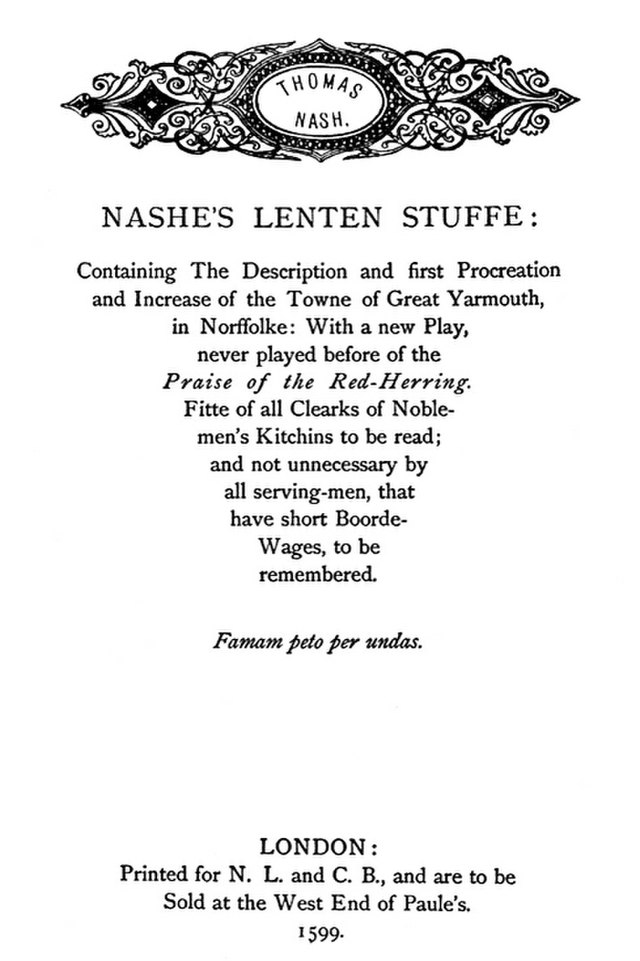
I chose to write my second seminar reflection about Thomas Nashe – it coincided with the Renaissance Literature syllabus, where I had learned about pamphleteers in early modern England the week before. Titled “Accidental Nashe”, the talk centred around the discussion of whether Thomas Nashe, pamphleteer and notable for his direct involvement in bookmaking had left errors in his work purposely. I found this theory quite convincing when provided examples of these “accidents”. I was fascinated with the textual awareness that Nashe displayed – I have been interested in evaluating books and manuscripts in terms of their physical features since I completed the book history module the semester prior. I had included codicological features in the Wikipedia page I edited. Not only that, but there were interesting questions raised about the nature of editing that were of interest to me; what to edit, and what to omit.
“Professor Richards mentions a few serious errors in his work that have landed him into trouble, notably in a text where he made the error that Christians were “disobedient” to His word rather than the intended “obedient”. As you can imagine, that is quite a serious oversight. Especially in sixteenth century England. Although he waves away these errors and blames his fellow printmakers’ poor handwriting, given what is known about Nashe and his penchant for the obscene, I find it hard to believe that this error was, indeed, an “accidental Nashe.” Although not all of Nashe’s “errors” had the potential of having serious repercussions like the instance I referenced above. There were also “errors” corrected by future Nashe editors, ones that were interpreted to be incorrect and subsequently “fixed”. The example that I found most compelling was an instance of Nashe describing a goatee in The Unfortunate Traveller, or The Life of Jack Wilton. He compares the tip of the beard as excrement that goes up from ankle of his “shinne”, originally. The comparison makes sense: Nashe is employing the technique of paronomasia, also known as wordplay or punning. In subsequent editions of Nashe’s work, this pun is changed to “chinne”, or “chin” (14) in the modern translation I am using. Nashe’s punny nature presents a certain challenge for editors: what is an error?” – “Accidental Nashe”
Although I found difficulty in maintaining my blog with updates – from compounding factors of illness and wrestling with indecision about what would be worthwhile to post – the experience of having an academic blog has been worthwhile. It has given me the chance to dabble with trying to establish the tone I want in my writing. I have tried to strike the perfect balance between academic and personal, which I believe has yielded decent results. I wanted to be simultaneously passionate and contributory, and I wanted it to be evident in my work. Writing the long-form entry about Testament has inspired me to write a thesis about the text, so even if my aspirations in the tone I aimed to developed falls, there is always a silver found within the satisfactory research I conducted.